
[Founder’s Note] Why we keep going.
Whenever the work of building and sustaining the Critical Ecology Lab pushes me toward burning out, I return to an exchange I shared with a total stranger in February 2023.
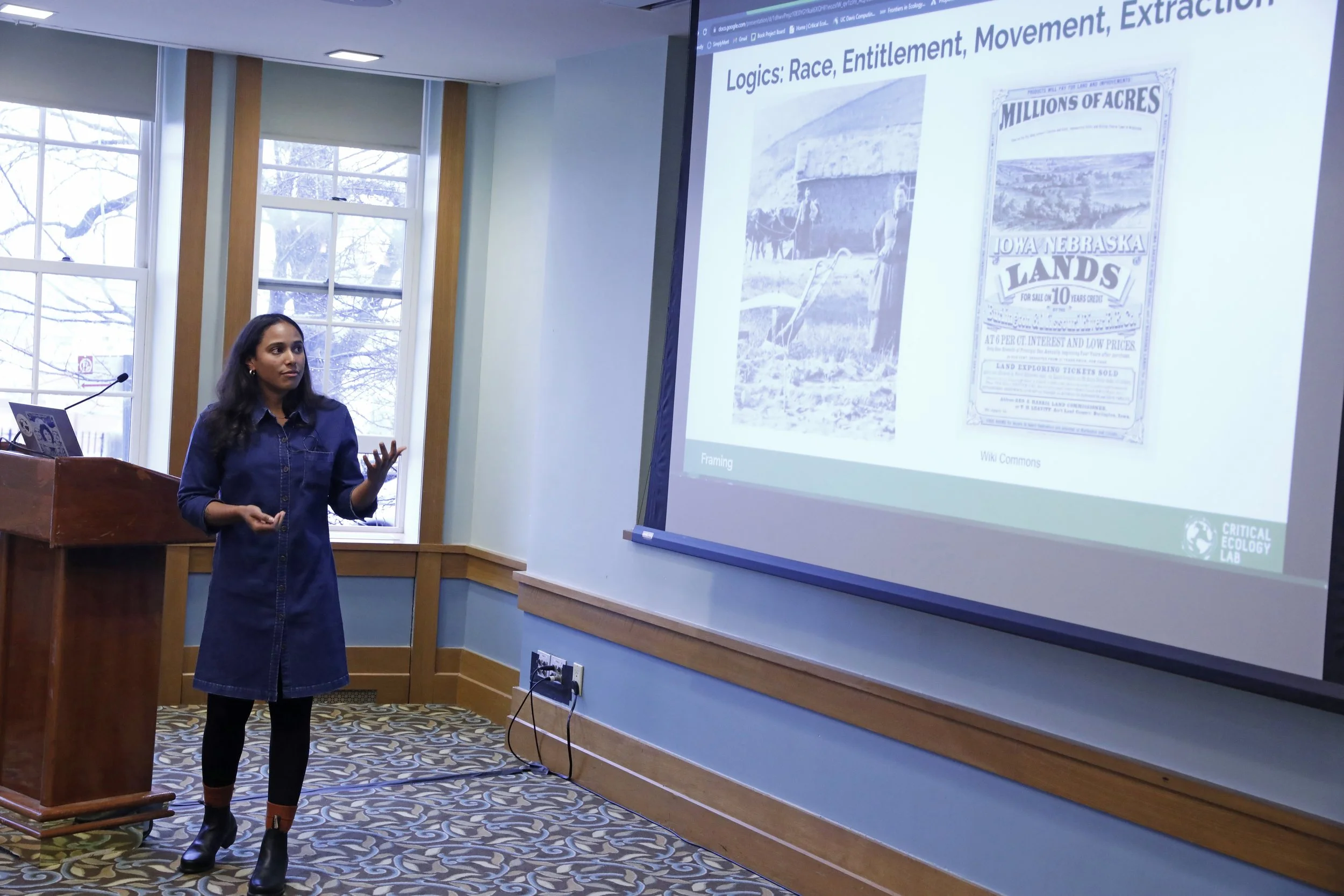
I had been invited to give a lecture at the Columbia University Climate School. Standing at the front of a large room in Columbia's Faculty House, I spoke about the ways that systematic exploitation of people leads to degradation of the planet — and how soils can reveal this history. There was a gentleman at the back of the room, standing behind a video camera, sent by the university to document the event. He was also the only Black man in the room.
“…telling the story of oppressed and exploited people as part of a larger story of planetary dysregulation brings more truth, honor, and dignity to our lives.”
At the end of my talk, as the room was clearing, he paused just as he was passing me. He set his equipment down. He turned to shake my hand. And he said something I haven't forgotten: "Thank you for telling the truth. For telling the whole story about us."
He spoke with tears in his eyes. His words wicked emotion into my chest, and my own tears followed. His was the feedback I needed to hear — not from a scholar or a peer reviewer, but from someone who shares experiences and lineage with me, and who saw our research for exactly what it is. Across the theory and the data, he understood that telling the story of oppressed and exploited people as part of a larger story of planetary dysregulation brings more truth, honor, and dignity to our lives. He understood our research as a process of accountability that can lead to solutions.
That moment was simple and exceptional. And if our work succeeds, it will become a moment of self-recognition that many more people get to have — in classrooms, in field sites, in the communities where this research lives.
Our process of using science to reveal what has been hidden is revolutionary — and it yields two gifts.
The first: the Critical Ecology Lab produces knowledge about how humanity has shaped the Earth, rendered in the key of repair. The second: through the practice of research itself, our work affirms lived, generational experiences in ways that spark healing. This is what the cameraman at Columbia needed me to know. Only in healing can real repair happen — in societies, and in ecological systems alike.
From Greenland to Brazil, people across the world have shared this moment of recognition with me. A stranger on the other side of a camera in New York City reminded me that this is what we are working for. That reminder is enough to keep going.